Enquiry: how does translating an image through different grid-based systems change the way its visual information is represented and perceived?
Digital grids degrade an image by rule, but my cross-stitch showed me that making by hand introduces variation I can’t fully control. I moved into physical materials to test that directly. I rebuilt the fence with stamped letters, wove strips of the photograph and its ASCII version together, transferred fragments with tape, cut away pixel-like sections, and punched holes through the printed image to leave only the structure behind. These are quick, hands-on experiments, and I let the uneven results stay in the work, because the imperfection was part of what I was investigating. They connect back to Jacquard, since both weaving and punched holes encode a pattern through repeated units and absence, and to Fudge’s work on repeated strips, misalignment and distortion.
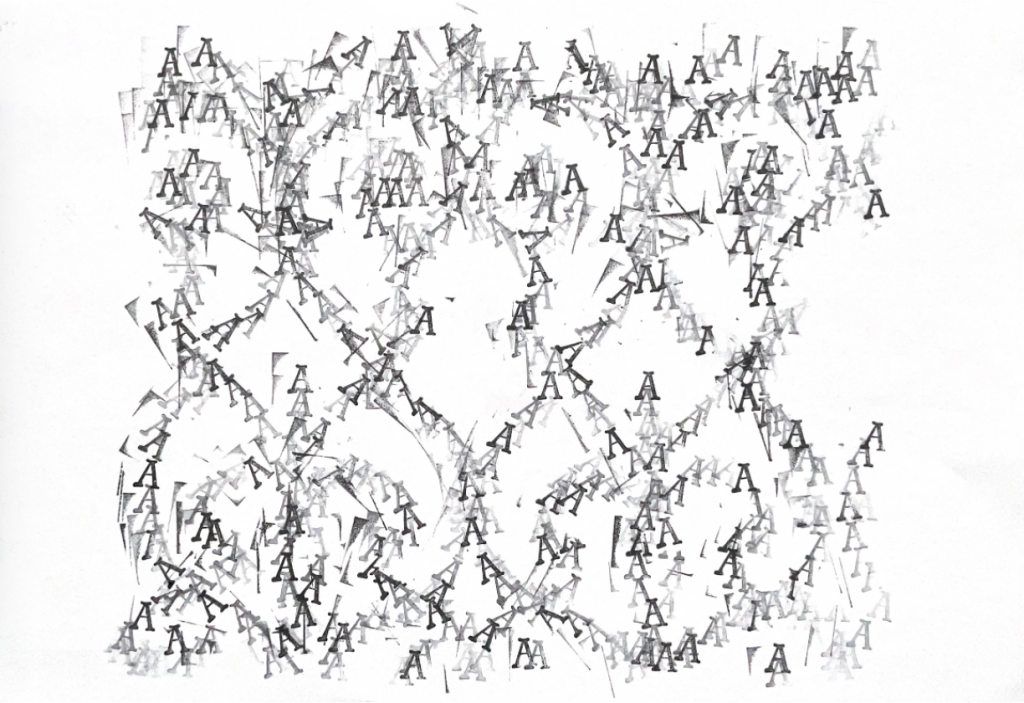
04a — ASCII fence using letter stamps
FIELD
NOTES
What I changed
Reconstructed the fence using repeated stamped letters, using the letter A.
What I kept consistent
The fence’s overall composition and the repeated character used to construct it.
What happened
Letters formed the fence’s visual structure, turning language into image-making material.
What it communicates
A recognisable image can be constructed from units that ordinarily communicate language.
My response
The repetitive stamping process made the construction of the image physical and visible.
What I learnt
Replacing pixels with letters changes the image’s texture and the way it is read.
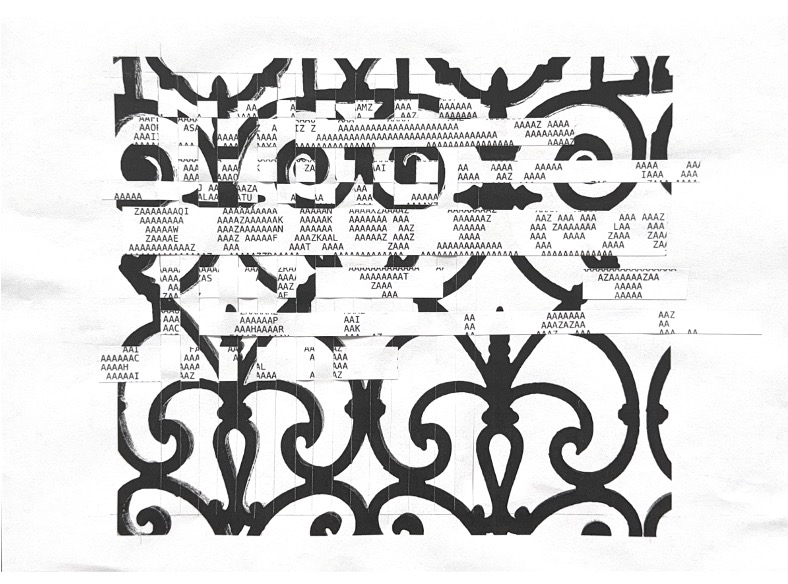
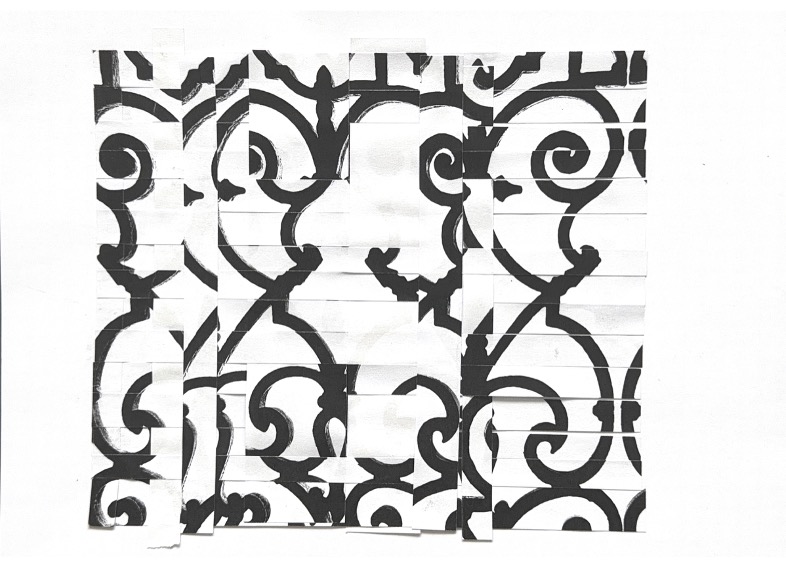
04b — Paper weaving with the original and ASCII image
FIELD
NOTES
What I changed
Cut the original photograph and ASCII version into strips and wove them together.
What I kept consistent
The same fence image and the two source representations.
What happened
The uneven weaving created a glitch-like image in which the two representations disrupted each other.
What it communicates
Combining two image systems can create a new representation rather than simply preserving either original.
My response
The uneven result highlighted how difficult it was to maintain precise alignment by hand.
What I learnt
Physical construction introduces irregularities that can change the image beyond the intended digital translation.
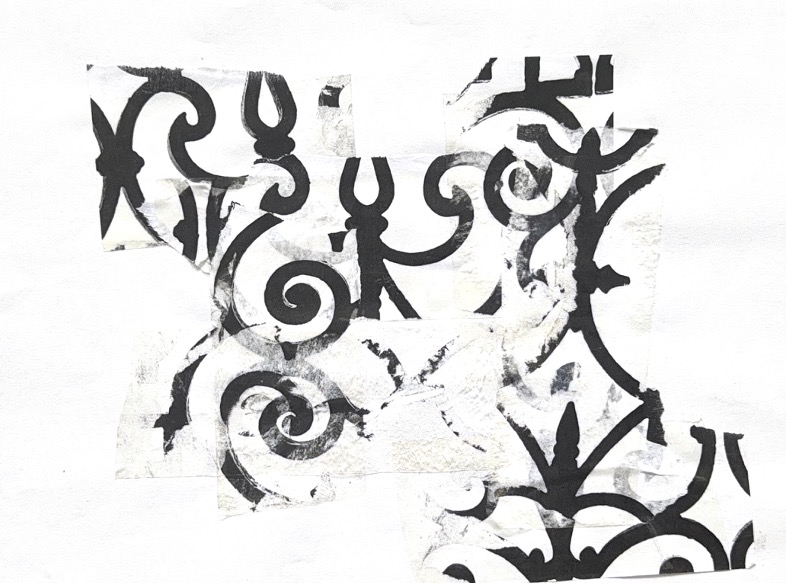
04c — Tape-transfer collage
FIELD
NOTES
What I changed
Transferred fragments of the photograph using tape and assembled them as a collage.
What I kept consistent
The source photograph and recognisable fence details.
What happened
The image was broken into fragments, with parts separated and recombined.
What it communicates
Reproduction can be partial: fragments may survive even when the original image is disrupted.
My response
Handling the image physically made the process less predictable than digital editing.
What I learnt
Material properties and transfer methods influence which parts of an image survive.
04d — Weaving two original photographs
FIELD
NOTES
What I changed
Compared an intact photograph with a version woven from two copies of the original.
What I kept consistent
The same source photograph and visual content.
What happened
The intact image preserved the original composition, while weaving interrupted its continuity.
What it communicates
The same source material can produce different perceptions depending on how its parts are arranged.
My response
Comparing the two made the effects of alignment and physical interruption visible.
What I learnt
The arrangement of image fragments affects how the whole is reconstructed by the viewer.
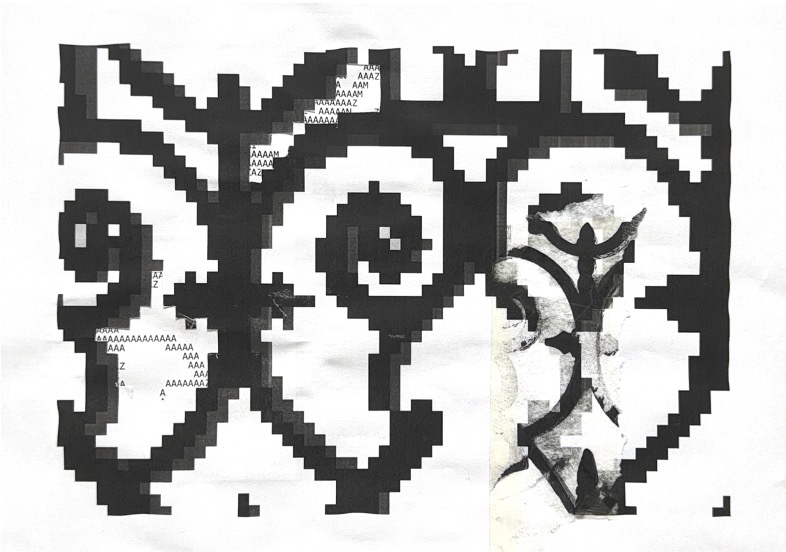
04e — Cut-out photograph with close up, ASCII and tape transfer
FIELD
NOTES
What I changed
Cut random pixel-like sections from a close-up, placed ASCII imagery behind it and added a tape transfer.
What I kept consistent
The close-up of the fence and recognisable elements of its structure.
What happened
Different image layers became visible through the cut-outs, creating gaps and overlaps.
What it communicates
Visual information can be revealed, hidden or replaced by another representation.
My response
The quick, irregular cutting introduced an element of chance into the process.
What I learnt
Combining disruption, layering and translation can change both the image’s structure and its legibility.
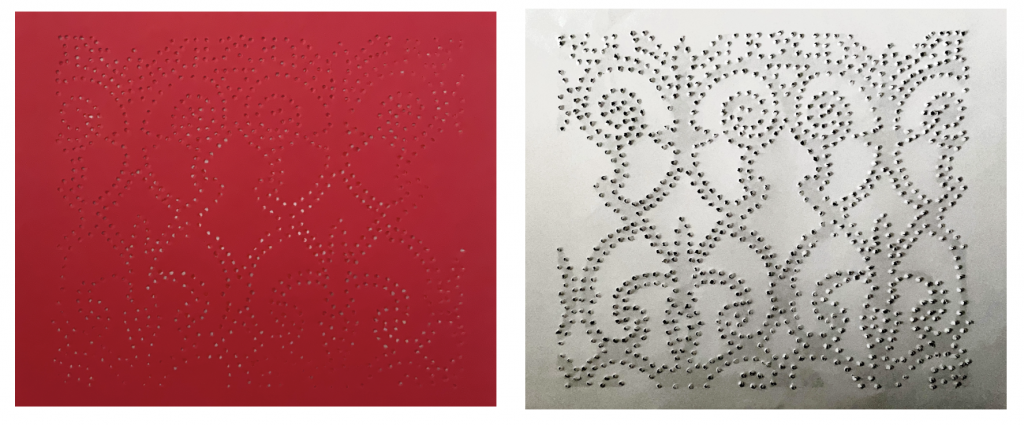
4f — Reconstructing the fence through punched holes
FIELD
NOTES
What I changed
Placed a sheet of paper behind my printed fence image and punched holes through both layers, following the shapes and structure of the fence. I then removed the printed image, leaving the punched paper as a representation of the fence.
What I kept consistent
The original fence’s arrangement of vertical bars, horizontal lines, curves and gaps, using the punched holes to follow its visual structure.
What happened
The fence was translated from a printed image into a pattern of holes. Removing the original photograph meant that only the holes remained to represent its structure. The image became dependent on the position and spacing of the holes rather than its original lines and tones.
What it communicates
The experiment explores how visual information can be represented through absence rather than solid marks. Instead of drawing the fence, I used empty spaces to reconstruct it. The holes preserve parts of its structure while removing its original surface detail, changing how the image is recognised and interpreted.
My response
I found it interesting that I could still refer to the original fence without keeping the photograph itself. The process made me think about how much information can be removed while the structure of an image remains recognisable.
What I learnt
A grid based image does not always need to be made from visible marks. Holes and negative space can also carry visual information. Changing solid lines into empty spaces alters the way an image is represented, even when its underlying structure is maintained.
What this section showed: Handwork degraded the image unpredictably where the digital grids did it by rule, and the irregularities became part of what the image said. The punched holes were the clearest example: the fence survived as absence rather than as marks.

Leave a Reply