Enquiry: how does translating an image through different grid-based systems change the way its visual information is represented and perceived?
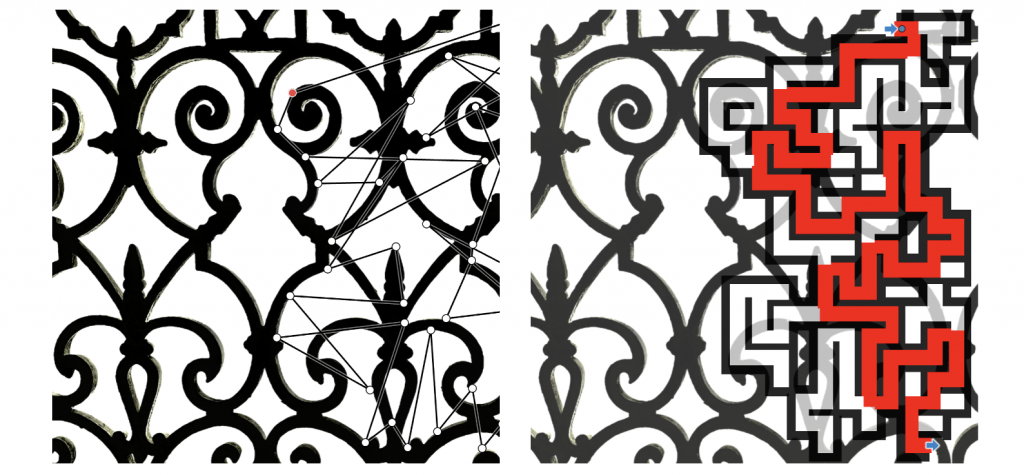
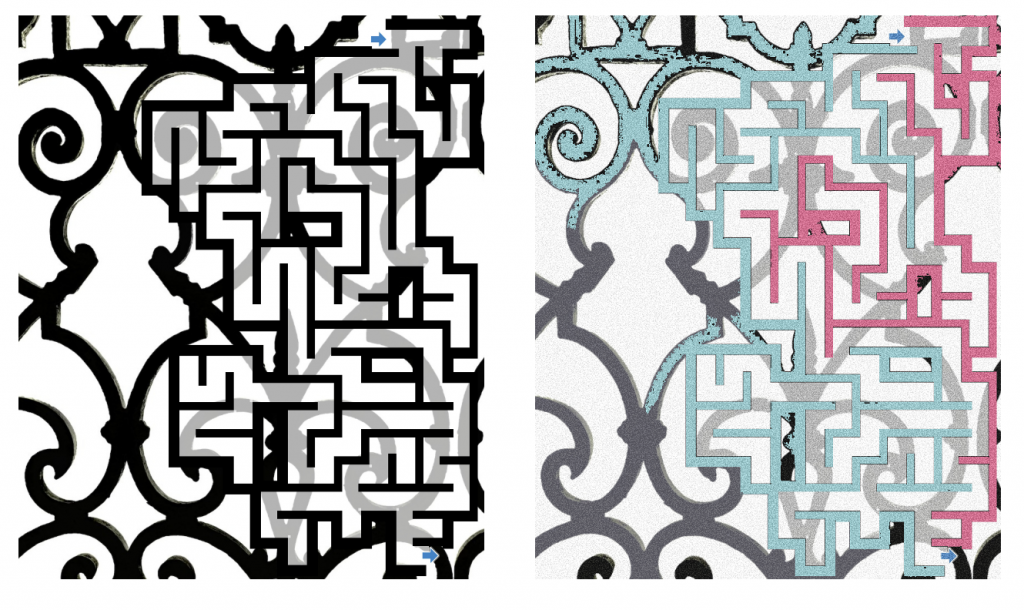
Up to this point I had changed how the fence was built. In this post I changed how it is viewed, then how it is constructed, then what it is translated into. First I tested viewing distance, digitally by zooming and physically by walking towards a print in the corridor, to see whether perception depends on the viewer’s position as well as the translation. Next I built grids out of the fence itself, so image and structure became the same thing, which is close to how Agnes Martin made the grid the subject of her work. Finally I moved the fence out of the visual field altogether, turning it into sound, a typeface, a pattern, a maze and a Minecraft structure. The question here shifts from how the image looks to what the fence does when it is heard, read, navigated or entered.
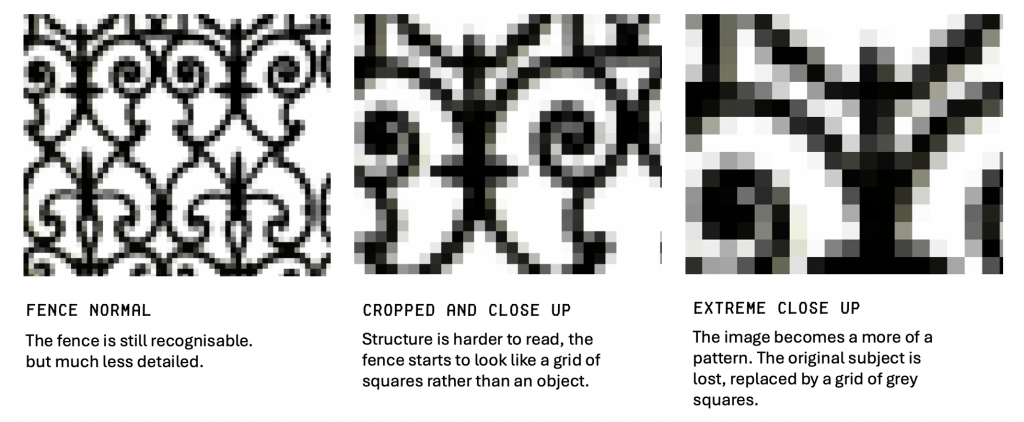
06 — Zoomed-in and zoomed-out images
FIELD
NOTES
What I changed
Compared and annotated views of the grid-based image at different zoom levels.
What I kept consistent
The same image and grid-based representation.
What happened
From a distance, the grid read as an image; close up, its individual units became more prominent. Fine fence details disappeared sooner than the main horizontal and vertical lines.
What it communicates
Perception changes with viewing distance: the viewer alternates between seeing the subject and seeing the grid.
My response
Moving between scales revealed details that were not equally visible at every distance.
What I learnt
The viewer’s distance is part of how the image is perceived, not just a condition of viewing it.
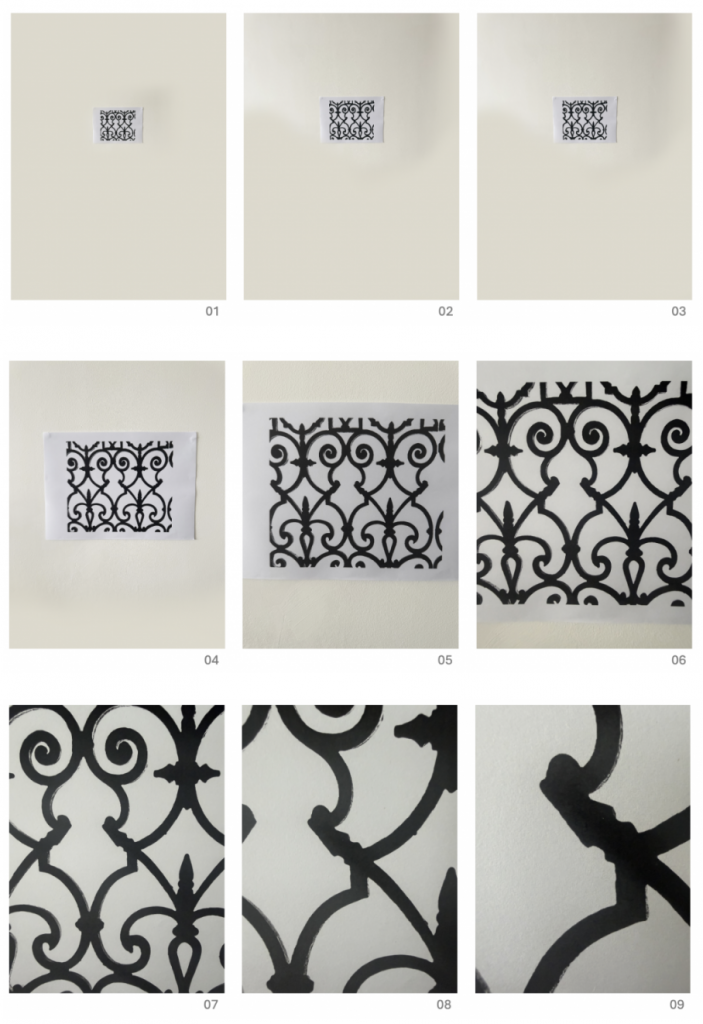
07 — Physical distance test in the corridor
FIELD
NOTES
What I changed
Changed my viewing distance by progressively moving closer to an A4 black-and-white print of my fence photograph.
What I kept consistent
The same printed image, its size, and its black-and-white tones.
What happened
As I moved closer, the image shifted from being viewed as a whole to being seen through its individual lines, shapes and details. The physical print stayed the same, but what I noticed changed with my distance from it.
What it communicates
Viewing distance affects how visual information is perceived. From further away, separate details combine into a recognisable image; closer up, individual elements become more prominent and the overall composition becomes harder to read at once.
My response
This made me consider how an image can communicate differently without being altered. Changing my physical position changed the relationship between the individual details and the overall fence structure.
What I learnt
Image perception depends not only on how an image is translated through a grid, but also on how it is viewed. Distance changes whether I focus on the image as a whole or its smaller visual elements.
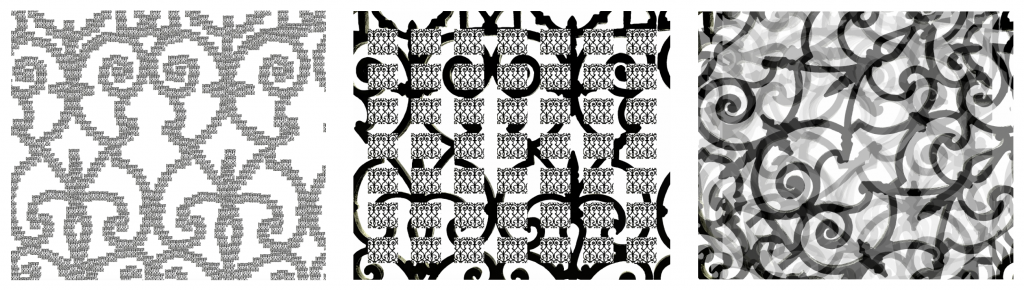
08 — Making my own grids and layering [13 versions]
Built grids from smaller copies of the fence; added nested squares; layered and offset copies; rotated transparent layers; combined different grid constructions.
What I kept consistent
The original fence photograph as the source material.
What happened
Gaps, rotations, overlaps and repeated layers created misalignment and glitch-like effects. The fence was reconstructed through multiple versions of itself.
What it communicates
A grid can be used to reorganise an image, not just divide it. Repetition and misalignment create new visual relationships.
My response
Building the grid from the image itself allowed me to move from applying a structure to constructing one.
What I learnt
The grid’s arrangement, spacing and layering can transform the image even when the source remains unchanged.
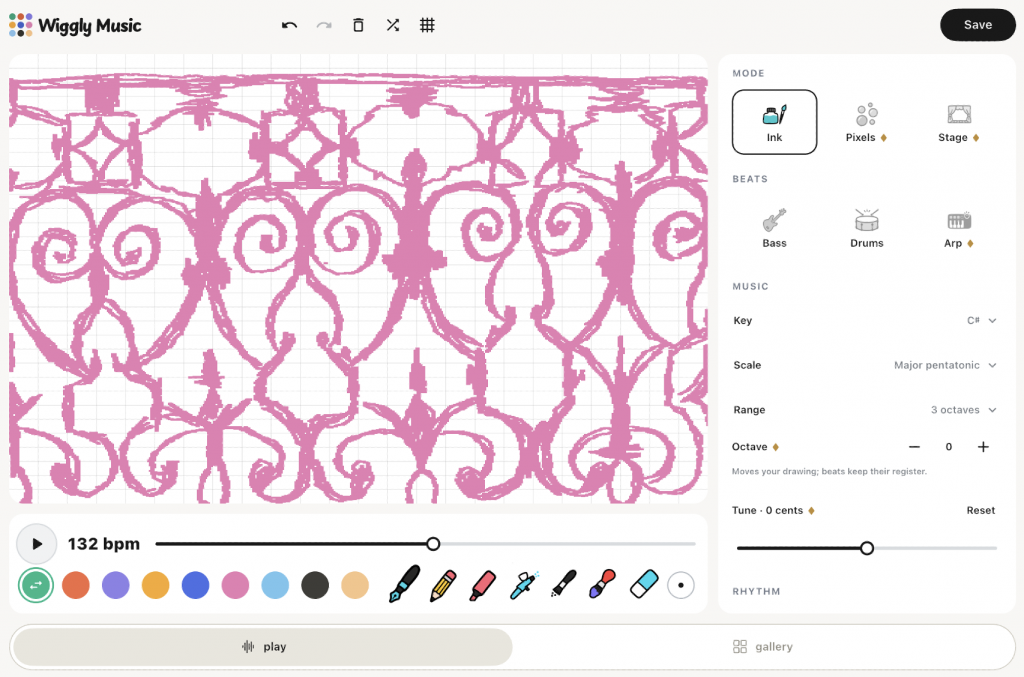
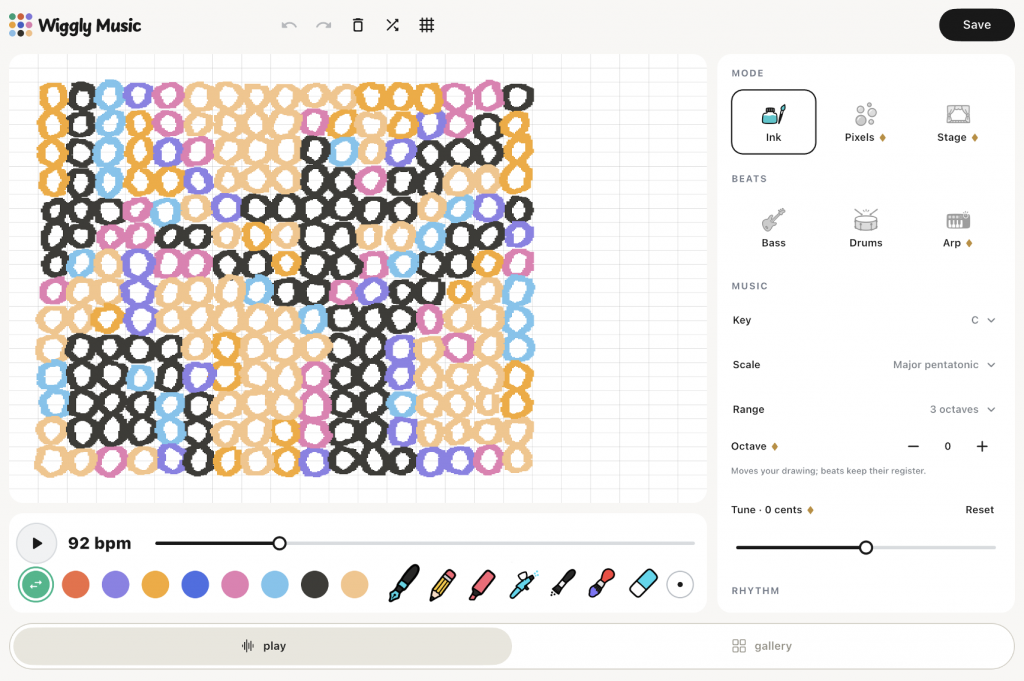
Created two drawings of my fence photograph and used a music-generating app (Wiggly Music) to translate them into sound. The first drawing represented the overall fence and produced a sound using strings. The second focused on a close-up, using circles to represent individual pixels, with different colours representing different tones and instruments assigned to those tones.
What I kept consistent
The original fence photograph as the source image and the same app used to translate the drawings into music.
What happened
The two drawings produced different musical outcomes. The first translated the fence as a larger composition, while the second broke it down into smaller tonal elements represented through circles, colours and instruments.
What it communicates
Translating an image into music changes the way its visual information is experienced. The original image is no longer directly visible; instead, its elements are reinterpreted through sound. The way the image is simplified and represented affects the resulting output.
My response
I found it interesting that the same source image could produce different sounds depending on how I represented it. This made me consider whether visual relationships can be communicated through another sensory medium, even when the original appearance is lost.
What I learnt
The way information is encoded influences what can be communicated. Changing the drawing from an overall composition to individual tonal units created a different translation of the same image.
10 — Making my own font from the fence
FIELD
NOTES
What I changed
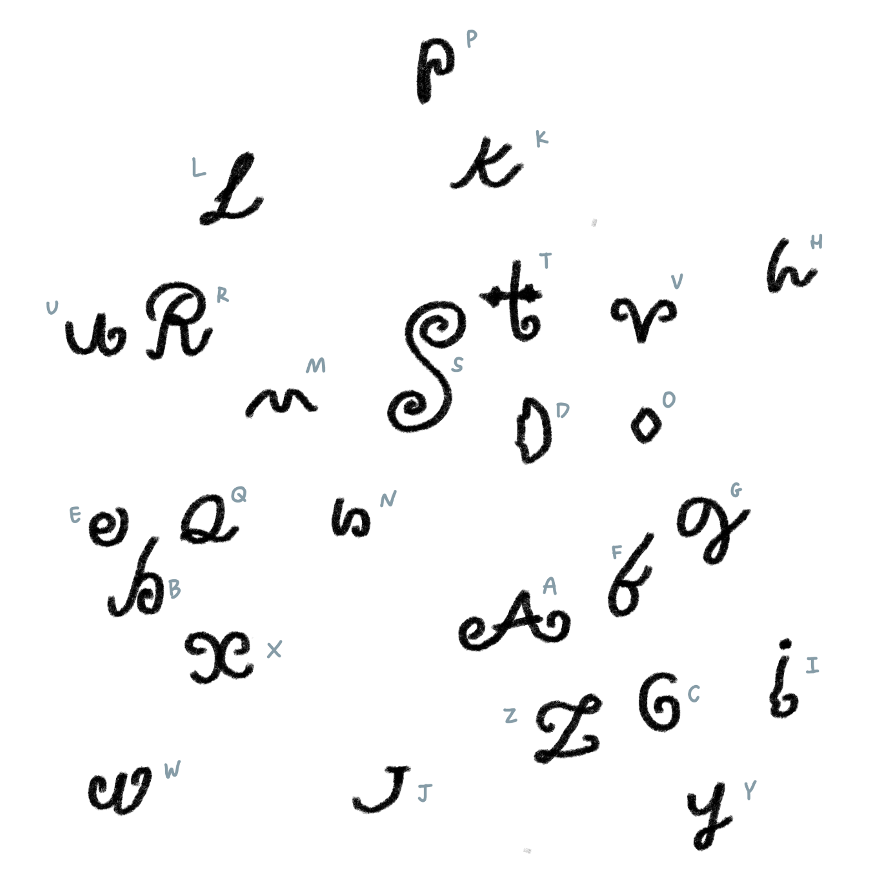
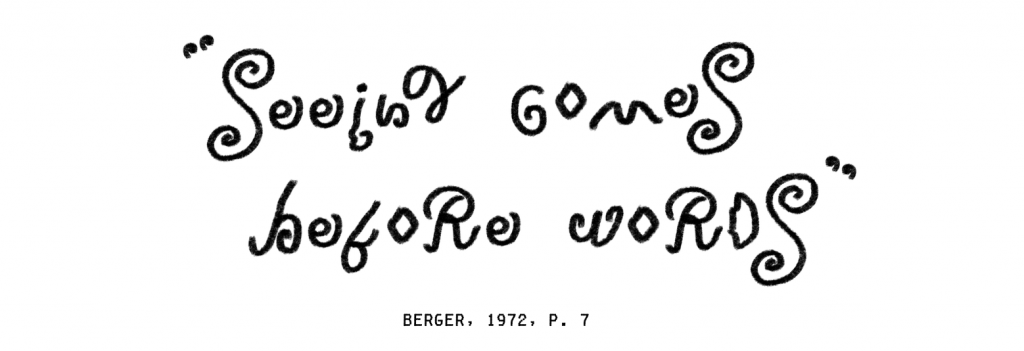
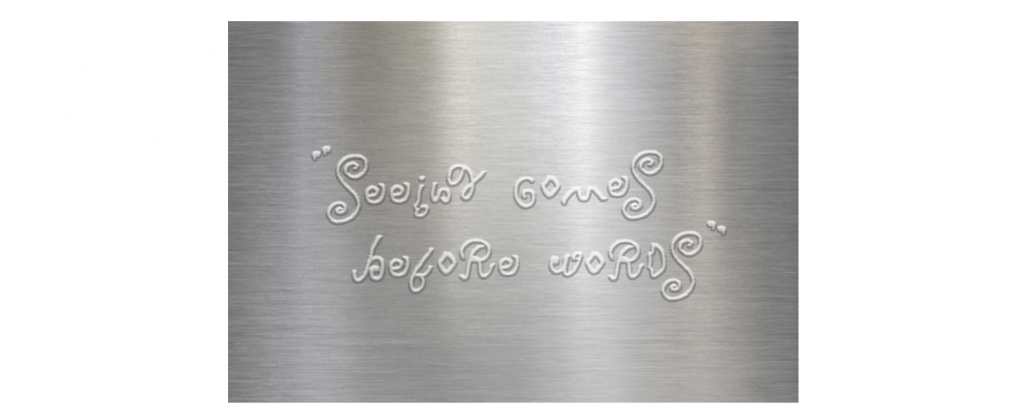
Extracted shapes from the fence and used them to construct letters, then typeset John Berger’s (1972) phrase, “Seeing comes before words.”
What I kept consistent
The fence’s visual forms as the basis for the alphabet.
What happened
Shapes that originally functioned as parts of a fence became components of letters and language.
What it communicates
The experiment connects seeing and reading: an image is translated into a system that communicates through written symbols. Berger’s phrase is relevant because the fence’s shapes become words, complicating the relationship between visual perception and language.
My response
Constructing letters from the fence made me reconsider familiar shapes as components that could carry a different meaning.
What I learnt
Visual forms can be reused across different systems, but their meaning changes with their function.
11 — Pattern from image [3 versions]
FIELD
NOTES
What I changed
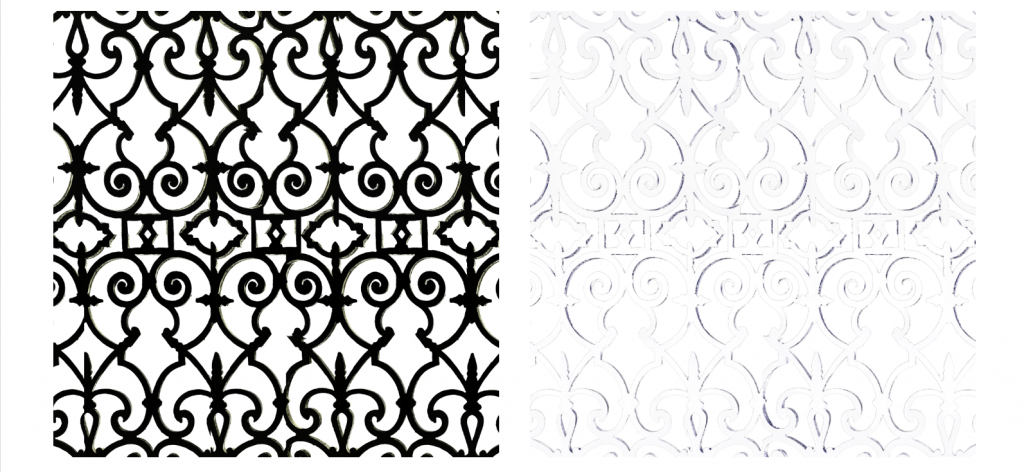
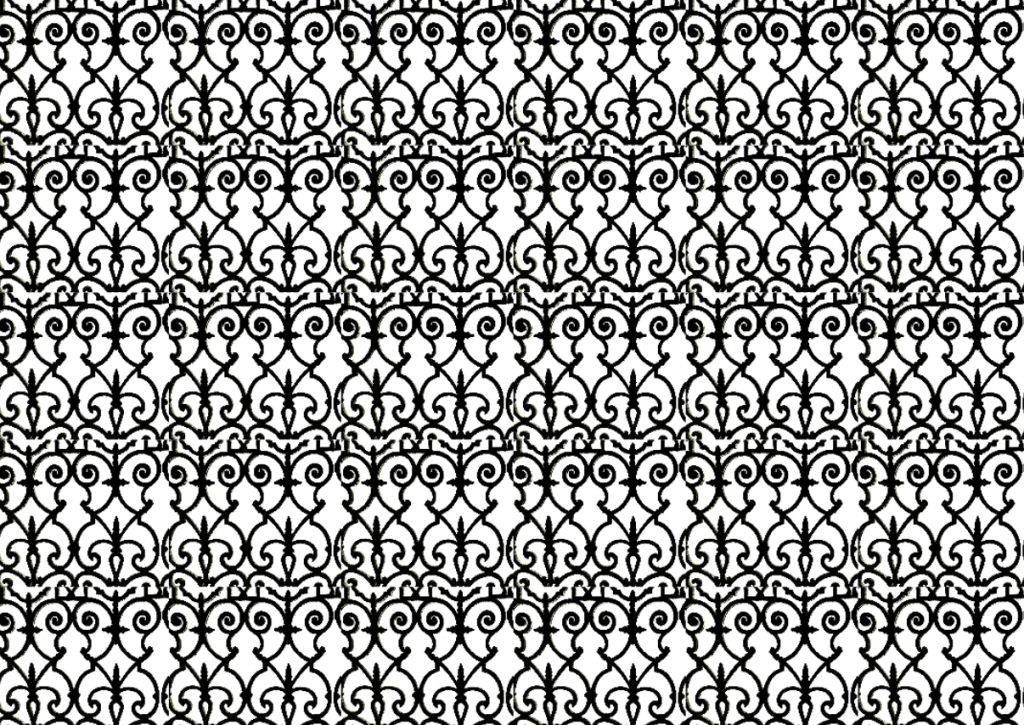
Repeated the fence’s forms to create a pattern, then inverted the image to emphasise white forms and shadows.
What I kept consistent
The fence’s original decorative shapes and repeating structure.
What happened
Repetition created a new pattern, while inversion shifted attention towards negative space and shadow.
What it communicates
Repeating an image can change its role: the fence becomes a pattern rather than a representation of a physical object.
My response
The decorative complexity made it difficult to create a seamless repeat. The inverted version offered a different way of reading its shapes.
What I learnt
Repetition and inversion change the balance between figure and background.
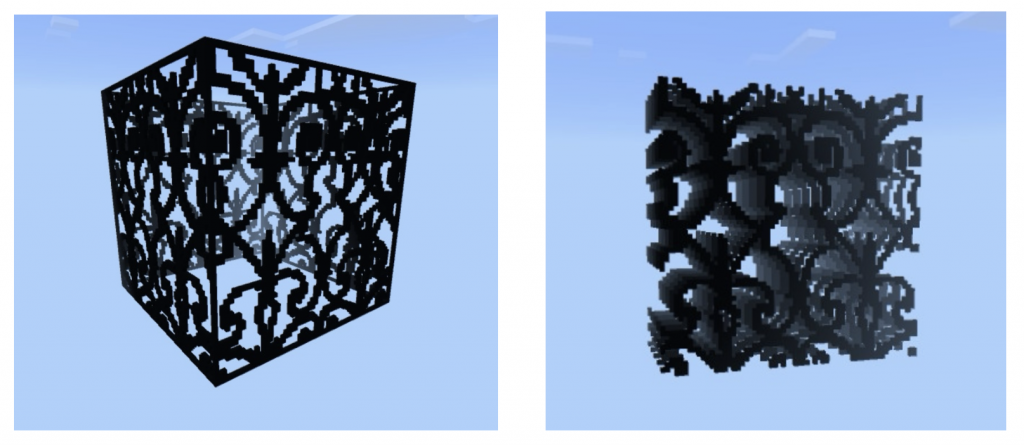
Reconstructed my fence in Minecraft by building a 3D cube-like structure with the top and bottom missing, using fences for each side. I then created a second structure by placing multiple fences behind one another, with gaps between them.
What I kept consistent
The repeating bars and gaps of the original fence, using Minecraft’s blocks and grid-based building system.
What happened
The fence became a three-dimensional environment rather than a flat image. The cube allowed me to experience the fence from within, while the repeated fences created a sense of depth as the structures extended into the distance.
What it communicates
A fence can be both something you look at and something that controls the space you occupy. In the photograph, the grid is a visual pattern. In Minecraft, reconstructing it in 3D turns that pattern into a physical-feeling boundary that surrounds or separates space. Repetition can make the boundary feel more extensive, raising questions about how grids organise not only what we see, but where we can go.
My response
I found it interesting to experience the fence in three dimensions. Reconstructing it was relatively straightforward, but seeing it as an environment changed my relationship with the image: instead of observing the fence from the outside, I could imagine being enclosed by it.
What I learnt
Translating an image into a different dimension can change its meaning, not just its appearance. The fence’s repeating grid became a spatial structure, demonstrating how the same visual information can communicate different ideas depending on how it is reconstructed.
What this section showed: Perception depends on where the viewer stands, and translation changes what an image does as well as how it looks. The same fence can be something to see, read, hear or move through.


Leave a Reply