
My enquiry from Draft 1 was: How does translating an image through different grid-based systems change the way its visual information is represented and perceived?
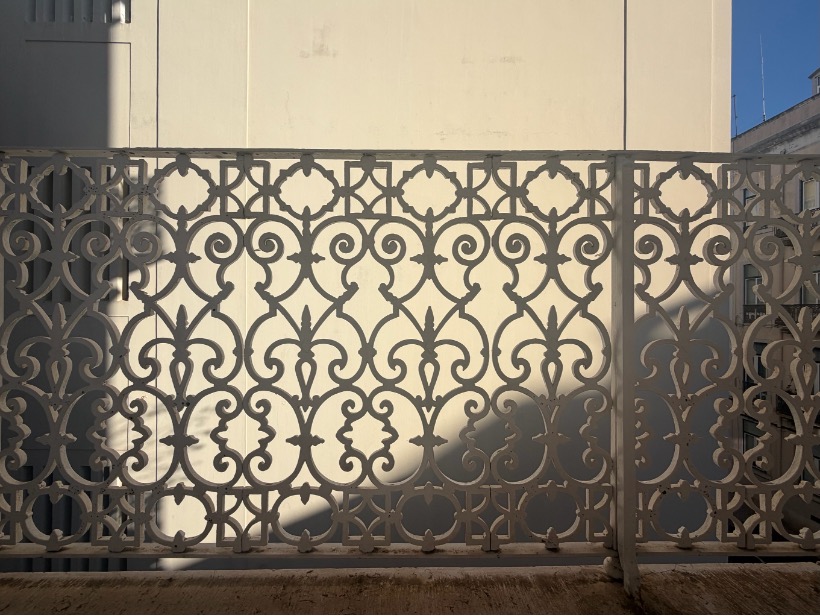
To test it, I photographed a fence and kept it as a constant source image. I then translated it through digital grids (pixels, halftone, ASCII, spreadsheet cells), physical processes (stamping, weaving, tape transfer, cutting), and finally systems that aren’t strictly visual (sound, type, a maze, Minecraft). Keeping the source fixed means any change comes from the method, not the image. The brief describes iteration as “engaging in a process, where the process is the output”, and that is how I’ve treated these: each experiment answers something the last one raised.
The sections are grouped as: digital grids (01–03, 05), physical translation (04), viewing distance (06–07), building my own grids (08), and translating beyond the image (09–13) with my reflections for each one.
My cross-stitch copy made me ask what a grid-like process keeps, hides or adds when it is laid over an image, and whether the imperfections of making by hand make an image feel more intimate or more distracting. To explore this I photographed a fence and kept it as my constant source image, so any change in the result comes from the method rather than the picture.
My enquiry became: how does translating an image through different grid-based systems change the way its visual information is represented and perceived?
I’ve treated iteration as the brief’s third definition, “engaging in a process, where the process is the output”. Each experiment responds to something the one before it raised, so the order matters. There are over 80 versions, which I’ve split across three posts:
- Digital grids: pixels, tone mapping, ASCII and spreadsheet cells. The grid applied by rule.
- Physical translation: stamping, weaving, tape transfer, cut-outs and punched holes. The grid done by hand.
- Perception, grids and beyond: viewing distance, building my own grids, and pushing the fence into sound, type, pattern, a maze and Minecraft.
Experiments are numbered in the order I made them, so numbers jump between posts.
Leave a Reply