What does the estate become when I translate its systems into an interface, a set of rules and a game?I brought together the observations, photographs, maps and sign interventions from my previous experiments to create The Lilac Lane Rulebook, a small zine made from a single sheet of A4 paper. I wanted to see whether I could translate the estate’s overlapping systems of control into a format that people could interact with differently from a conventional map or photographic record.
I used a Monopoly-inspired visual language, drawing on the familiar aesthetic of a board game to present the estate as a managed environment with instructions, boundaries and consequences. The zine brings together my own photography, the language of official signs, graffiti and a simplified version of my layered map.
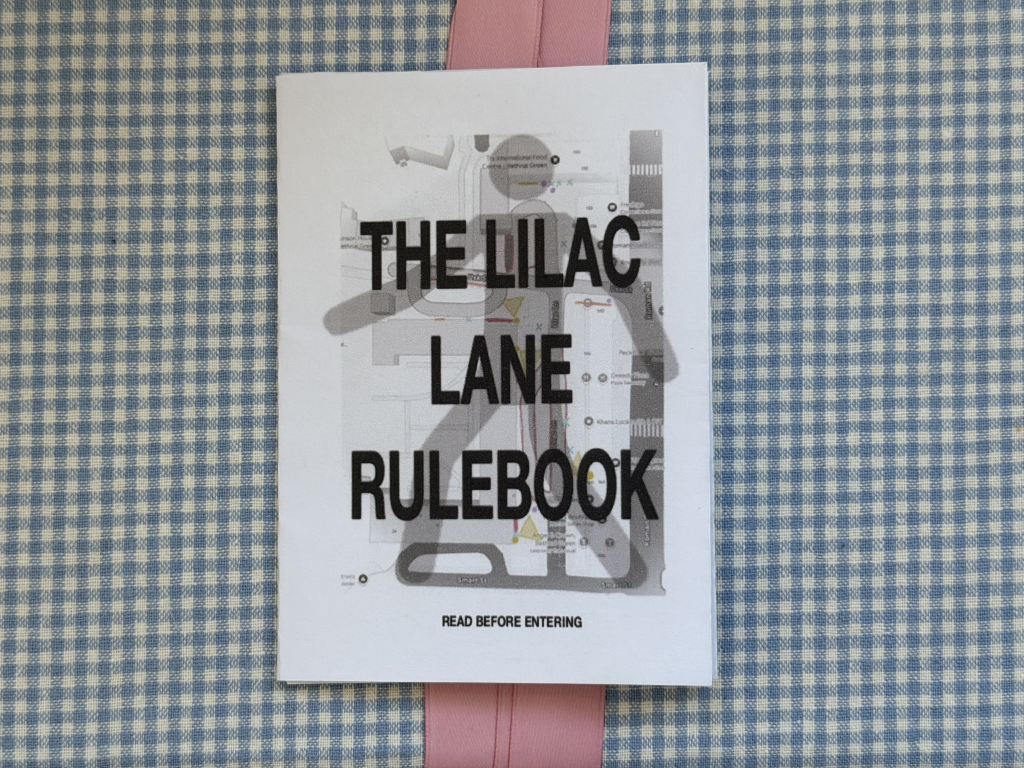
The cover uses the estate map as a background, alongside the symbol of a person walking that appears in a no-entry sign. I removed the red circle and the accompanying “read before entering” text, isolating the figure from its original warning. This allowed me to reuse a familiar symbol while questioning how its meaning changes when it is separated from the instructions that usually give it authority.
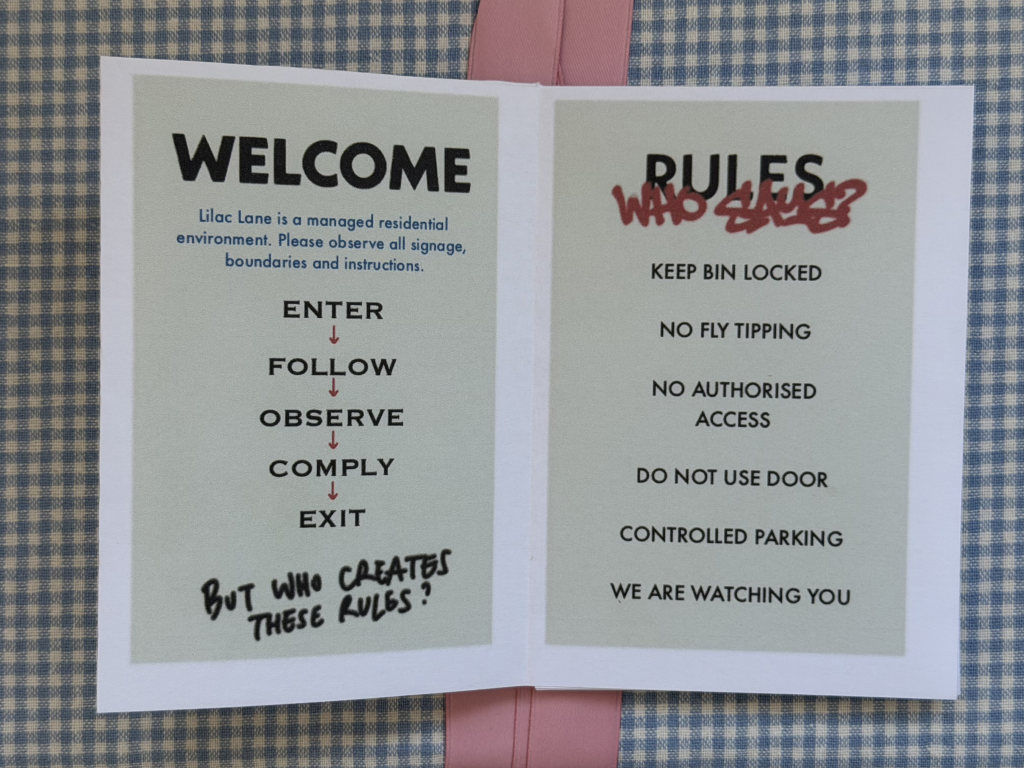
The next page introduces the reader to Lilac Lane:
“Lilac Lane is a managed residential environment. Please observe all signage, boundaries and instructions.”
Below this, a sequence of arrows directs the reader through the words ENTER → FOLLOW → OBSERVE → COMPLY → EXIT. In contrast, handwritten graffiti-style typography interrupts this sequence with the question: “But who creates the rules?” I wanted this question to challenge the apparent neutrality of the instructions and draw attention to the people and systems responsible for establishing them.
The following spread is headed RULES, with the words “WHO SAYS?” written across it in red graffiti-style lettering. Below are instructions taken from the visual language of the estate, including “KEEP BIN LOCKED”, “NO FLY TIPPING”, “NO AUTHORISED ACCESS”, “DO NOT USE DOOR”, “CONTROLLED PARKING” and “WE ARE WATCHING YOU”. By bringing these messages together, I created a concentrated version of the rules I had encountered across the site.
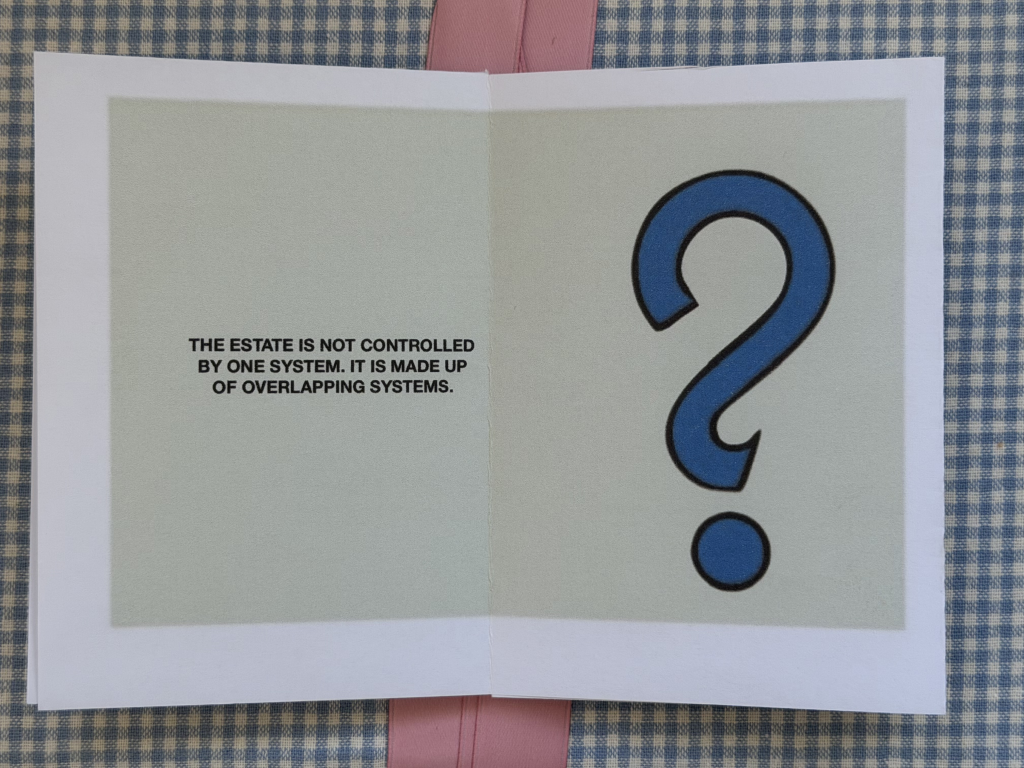
The next double-page spread uses a green Monopoly-inspired colour scheme and a large question mark taken from the visual language of a chance card. It states:
“The estate is not controlled by one system. It is made up of overlapping systems.”
This became the central statement of the zine, connecting my earlier mapping experiment with the different forms of control I had documented.
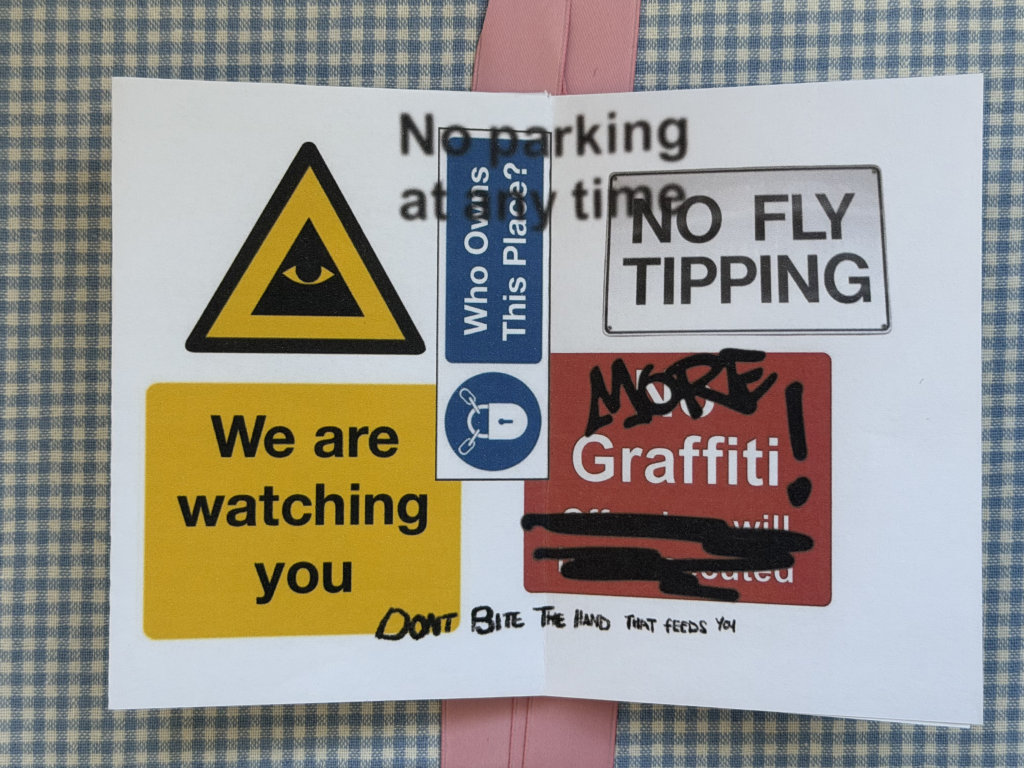
Another double-page spread presents a collage of my signs and found imagery. I included a photograph of a “NO FLY TIPPING” sign, alongside text taken from the graffiti “DON’T BITE THE HAND THAT FEEDS YOU” and the wording “NO PARKING AT ANY TIME”. By placing these different messages together, I wanted to show how official instructions and informal expressions occupy the same visual environment, sometimes reinforcing and sometimes contradicting one another.
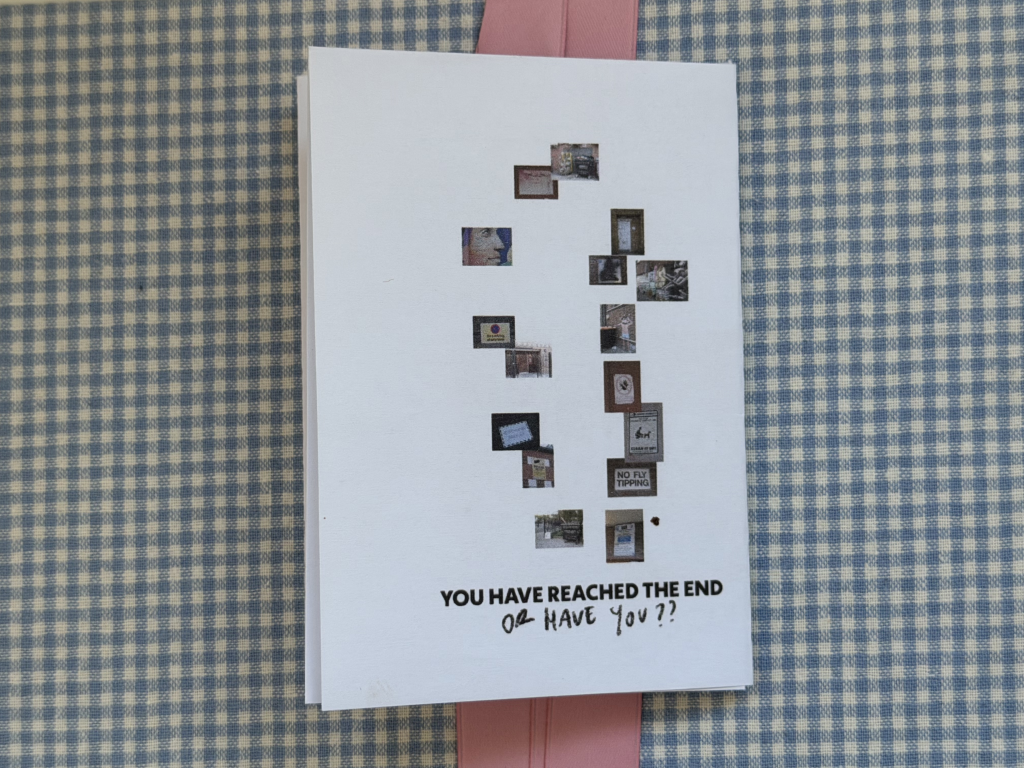
The back cover returns to my photographic map, using the images that collectively make up the map of my encounter with the estate. It reads “YOU HAVE REACHED THE END”, followed by the handwritten response “OR HAVE YOU?”This brings the zine back to the idea that the estate cannot be fully understood through a single route or reading.
WHAT I FOUND
Making the zine allowed me to bring the different strands of my project together in one format. The map, fences, signs, surveillance messages and graffiti became parts of a single visual system rather than separate experiments.
The Monopoly-inspired language was useful because it introduced a playful quality to an otherwise serious subject. A board game suggests movement, rules, permissions and restrictions, which made it an appropriate framework for translating the estate. The sequence from entering to complying and exiting turns the experience of moving through the environment into something resembling a set of instructions.
However, the handwritten interruptions prevent the rulebook from becoming entirely authoritative. “But who creates the rules?” and “WHO SAYS?” introduce doubt into a format that initially appears to tell the reader exactly what to do. The zine therefore contains two competing voices: one that instructs and manages, and another that questions who has the right to do so.
The final question, “OR HAVE YOU?”, also challenges the idea that the experience has a definite ending. Even when the reader reaches the back cover, the systems represented in the zine continue to exist beyond it.
REFLECTION
I am happy that I was able to make a zine that brings the project together, especially within the limited time available. I made it before my tutorial, so I had little time to plan the layout or develop the design as carefully as I would have liked. Working within one sheet of A4 also meant making decisions about what to include, what to leave out and how to connect the experiments without explaining every detail.
Looking back, I would have liked to spend more time developing the Monopoly-inspired visual language and considering how the reader moves through the zine. I would also have liked to experiment further with the balance between official typography and handwritten interventions, rather than treating some of the pages as separate compositions.
Nevertheless, the zine helped me understand that translating my research into a different format changes how the work is read. The map records spatial relationships, while the rulebook turns those relationships into instructions. The collage brings different messages into conflict, and the final question leaves the reader with uncertainty rather than a definitive conclusion.
Could this rulebook become a playable game, in which movement, access, surveillance and resistance are not only represented visually but experienced through decisions and consequences?
Leave a Reply